HomeUser Guide › Files
Files

Your shares, from anywhere

File Station and Shared Folders, plus the three DSM apps that are really about content: Note Station, Synology Office and Contacts. If Download Station is installed it lives here too - it has its own page.
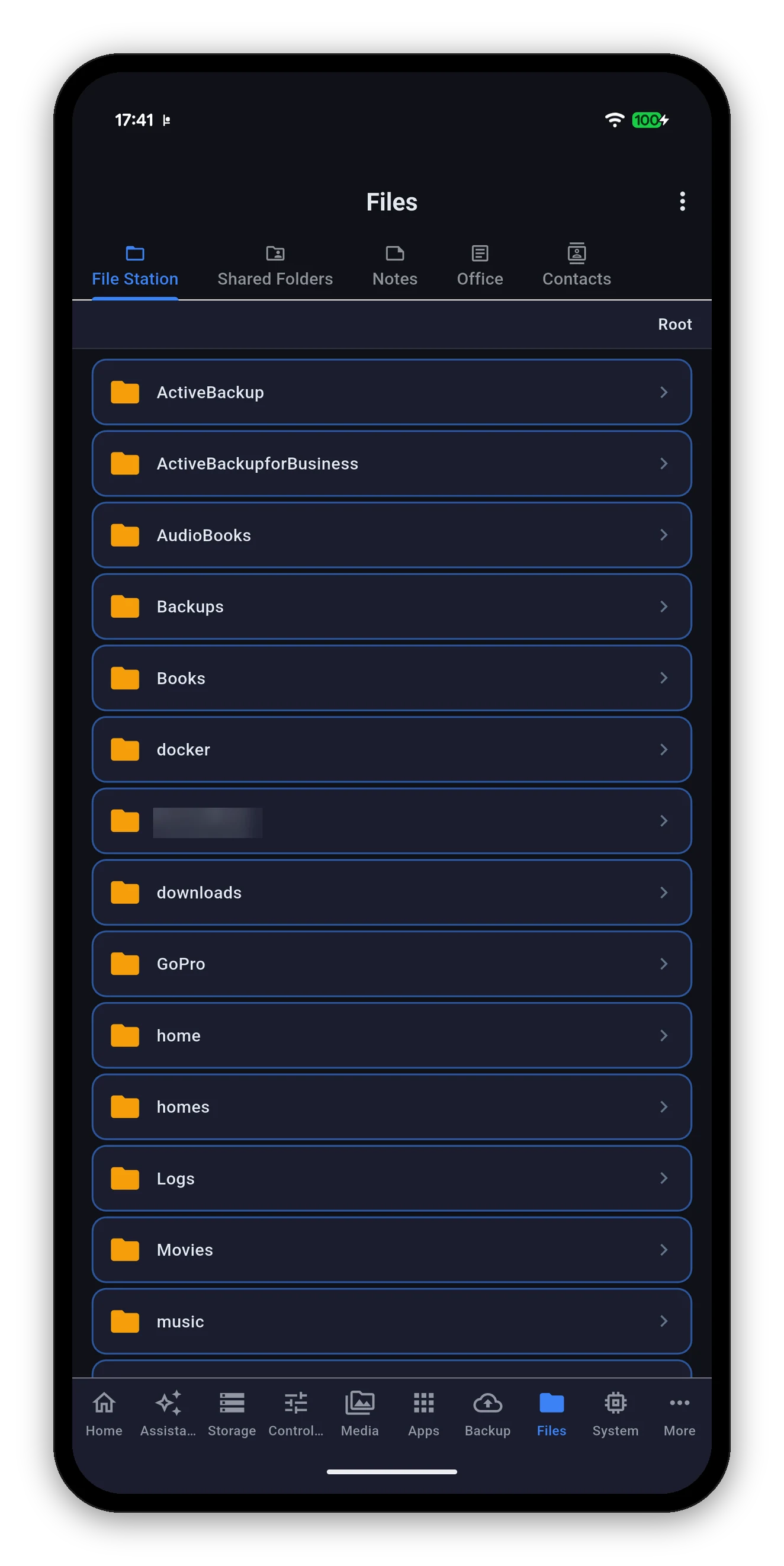
File Station browsing shared folders
File Station

Browse and download

Starts at Root - every shared folder your account can see - and walks down from there. The breadcrumb at the top shows where you are and takes you back up.

What you can see is what DSM lets you see. File Station here respects your DSM account's permissions exactly - a folder your account cannot read does not appear, the same as in the web interface.
Shared Folders

The shares themselves

Not the files - the shares. Each entry shows its name, the volume it sits on, its description and an ACL chip when it carries access-control permissions.
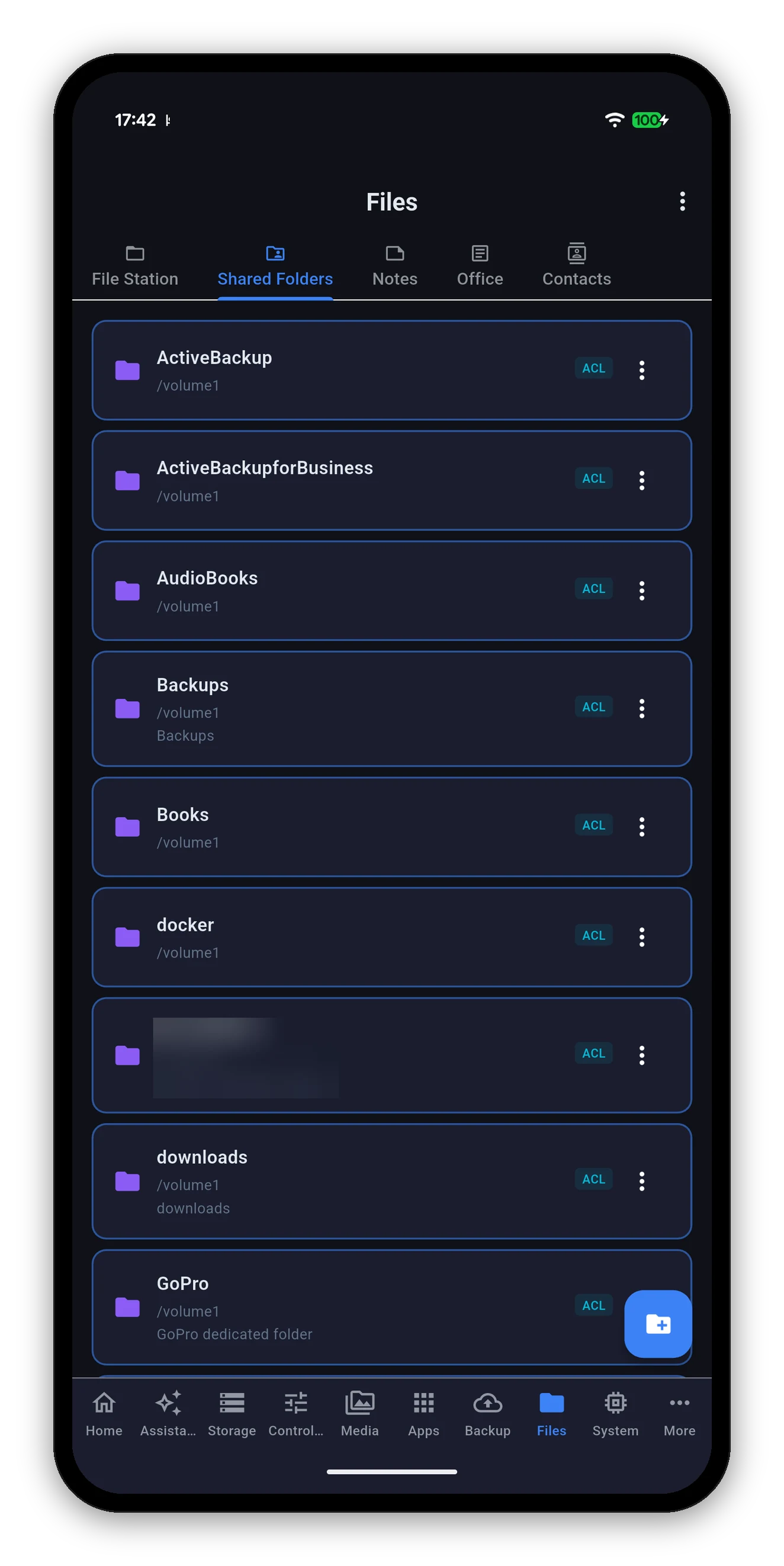
  • Create a shared folder with the button at the bottom right.
  • The overflow on each row holds what you can do to that share.
  • Encrypted shares are identified as such, so you can tell at a glance which ones need unlocking after a reboot.
Where a share lives matters. The volume is shown on every row, which is the fastest way to answer "which volume is filling up" when you are looking at a full one on the Storage screen.
Shared folders with volume, description and ACL chips
Note Station

Notebooks and notes

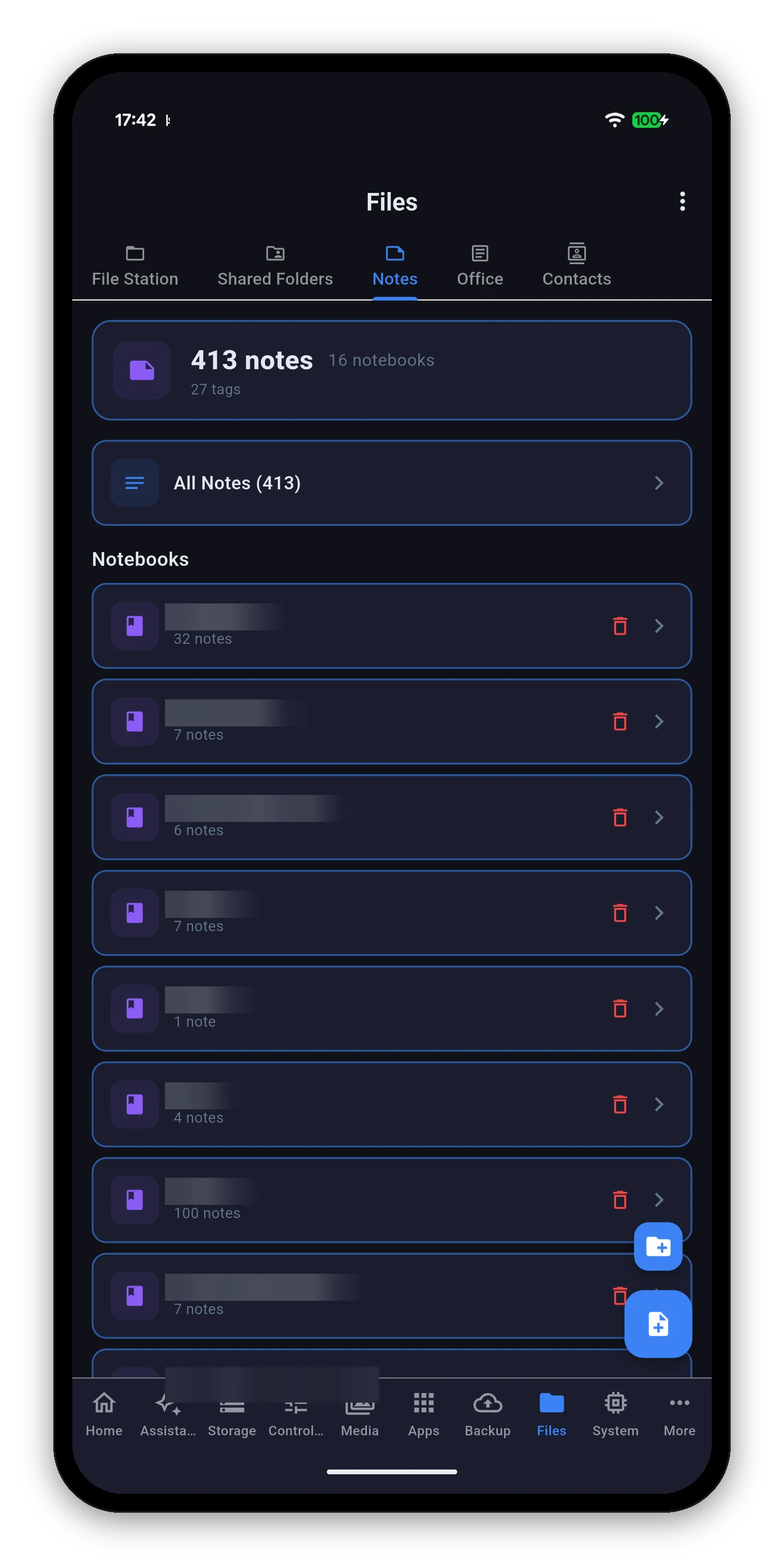
Note Station notebooks with note counts

A summary at the top - total notes, notebooks and tags - then All Notes and each notebook with its own count.

  • Open any note and read its full content.
  • Create a notebook or add a note with the two buttons at the bottom right.
  • Delete a notebook from its row.

Three notebook titles in this screenshot are blurred - they are a real NAS's.

Synology Office

Installed, and what it supports

A status screen rather than an editor: the version of Synology Office your NAS runs, and which document types it supports - Documents, Spreadsheets and Slides - each with a tick.
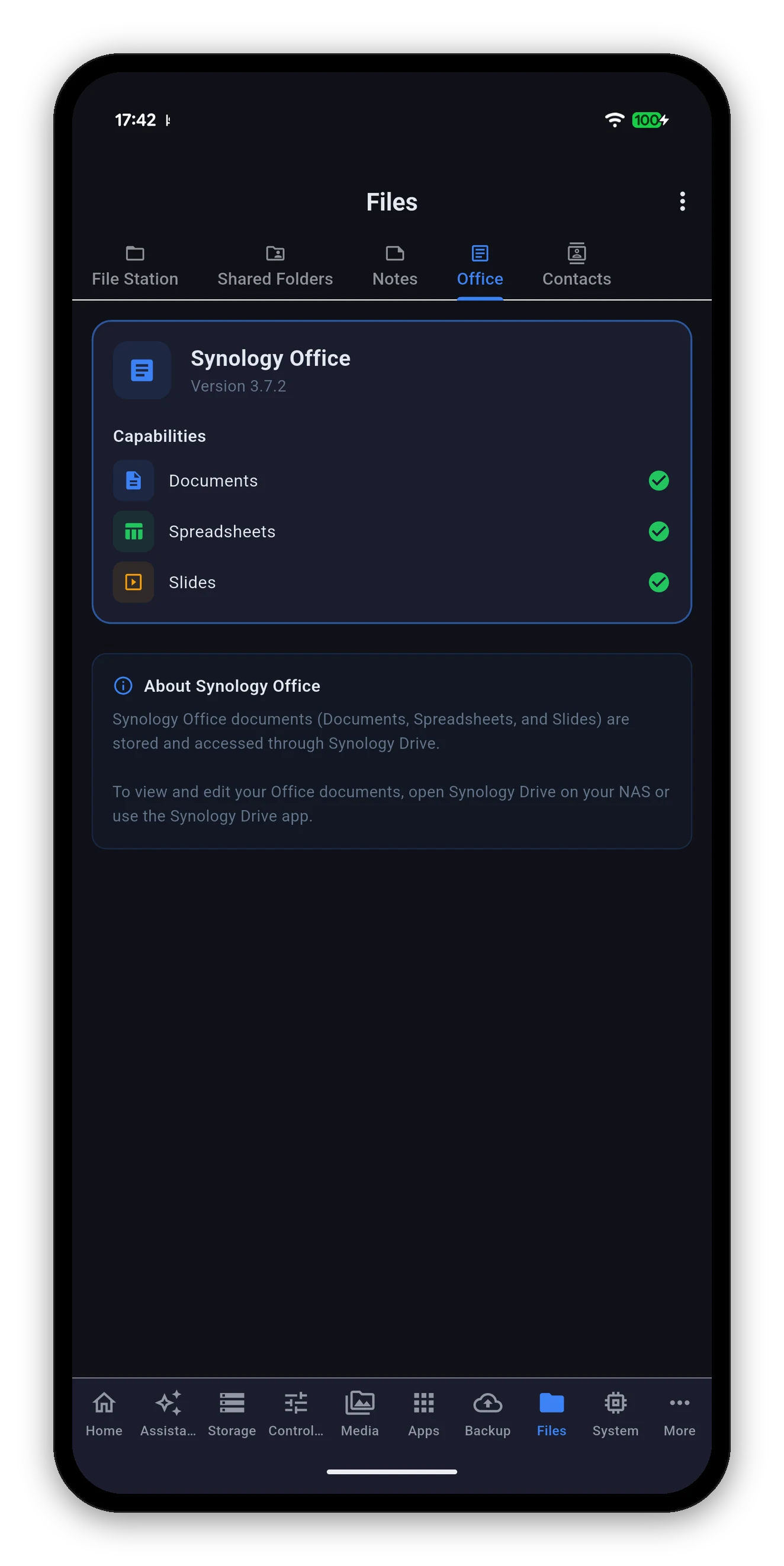
Why it stops there. Office documents are stored in and opened through Synology Drive. Rather than build half a spreadsheet editor into a NAS monitor, the app tells you Office is there and points you at Drive, which is where the documents actually live.
Synology Office status with Documents, Spreadsheets and Slides
Contacts

Address books

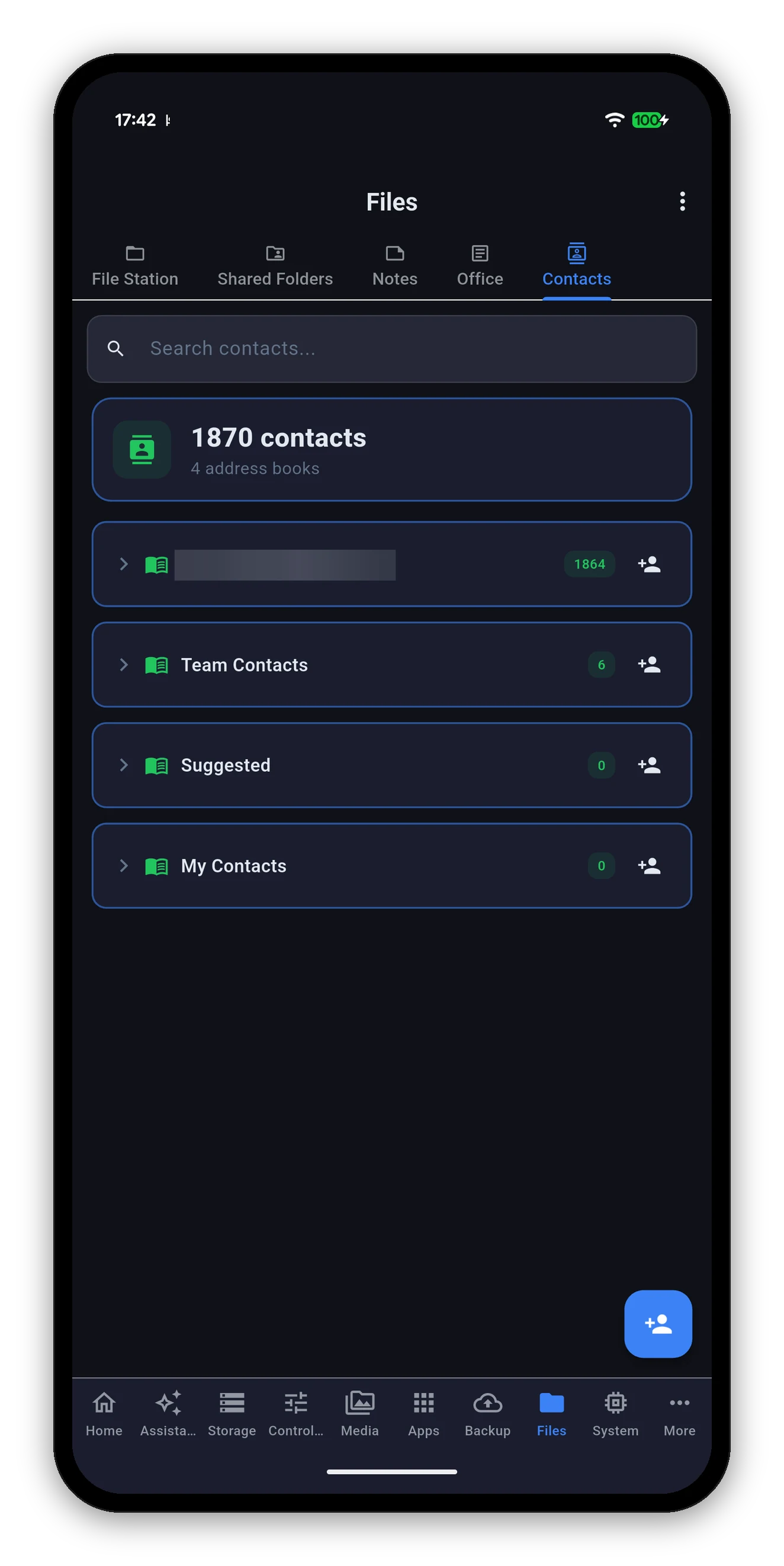
Synology Contacts address books with contact counts

A total across every address book, then each book with its own count - including books imported from Google, which appear alongside the ones created on the NAS.

  • Search across everything from the box at the top.
  • Expand a book to see the contacts in it; the sections collapse so a book with two thousand entries does not swamp one with six.
  • Add a contact to a specific book from its row, or with the button at the bottom right.
  • Edit or delete an existing contact.

One address book name is blurred - it is a real address.

Common questions

Files FAQ

Can I download a file from my NAS to my phone?
Yes. Open File Station, find the file and download it. On mobile the share sheet takes over; on Windows and macOS you get a native Save As dialog. Downloads work over QuickConnect too.
Can I create a shared folder from the app?
Yes, from the Shared Folders sub-view. Existing shares show their name, their volume, their description and whether they carry ACL permissions.
Can I read my Note Station notes?
Yes. The Notes sub-view shows your notebooks with a note count and a tag count, and you can open any note to read it in full, create a notebook, or add a note.
Why does Synology Office only show a status?
Because Office documents are stored in and opened through Synology Drive. The app reports that Office is installed and which document types it supports; editing a document belongs in Synology's Drive app.
Why can I not see a folder I know exists?
File Station here respects your DSM account's permissions exactly. A folder your account cannot read does not appear, the same as in the web interface. Sign in as an account that can see it.

Next: Download Station

Add by link, magnet or .torrent, and change the settings your NAS reported.
Download Station →   Back to the guide